

# Innovation in Small Business: Practical Strategies for Canadian Entrepreneurs
Innovation doesn’t require a Silicon Valley budget or a research lab. You can transform your small business by starting with one customer pain point and testing a simple solution within 30 days. That’s exactly what a Vancouver bakery did when they introduced text-message order confirmations, reducing missed pickups by 40% and boosting customer satisfaction overnight.
Small business innovation means finding smarter ways to solve problems, whether that’s automating your invoice reminders, offering virtual consultations, or rethinking how you package products. The businesses thriving right now aren’t necessarily the ones with the newest technology. They’re the ones asking better questions about what their customers actually need.
Consider innovation as a series of small experiments rather than one massive overhaul. A Toronto plumbing company started sharing 60-second repair tips on social media, positioning themselves as trusted advisors instead of just service providers. Within six months, their booked appointments increased by 25%. That’s innovation: taking what you already know and delivering it differently.
The good news? You probably have untapped innovative potential sitting in your current operations. Your team members see inefficiencies daily. Your customers mention frustrations regularly. Your competitors might be overlooking opportunities that seem obvious once you look closely. The question isn’t whether you can afford to innovate. It’s whether you can afford not to, especially when your competition is already testing new approaches to win the customers you’re both chasing.
This guide breaks down practical, budget-friendly innovation strategies that Canadian small businesses are using right now to stay competitive and grow.
What Innovation Really Means for Small Businesses
When you hear “innovation,” you might picture tech startups in Silicon Valley or research labs developing cutting-edge products. But in a small business context, innovation looks completely different, and it’s far more accessible than you think.
Real innovation for small businesses means finding smarter ways to do what you already do. It’s the Toronto bakery that switched from paper order forms to a simple online booking system, cutting phone time by half. It’s the Vancouver plumber who started sending appointment reminders via text, reducing no-shows by 40%. These aren’t revolutionary inventions. They’re practical improvements that solve real problems and free up time for what matters.
Consider the Halifax hardware store that moved its inventory tracking from handwritten ledgers to a basic spreadsheet system. That single change eliminated stock-outs of popular items and reduced overordering of slow movers. Or the Winnipeg accounting firm that adopted a client portal for document sharing, transforming a process that took days of back-and-forth emails into a streamlined system where clients upload tax documents directly.
These examples share a common thread: they identify friction points in daily operations and apply straightforward solutions. The Halifax store owner didn’t need a degree in data science. The Winnipeg accountant didn’t build custom software. They simply recognized inefficiencies and chose tools that already existed to fix them.
That’s what innovation means for your business. It’s spotting the tasks that waste time, frustrate customers, or create errors, and making targeted changes that improve them. Start by looking at your most tedious daily tasks. The innovation you need is probably simpler than you imagine.

Digital Tools That Drive Innovation in Daily Operations

Streamlining Customer Communications
Customer relationship management systems have become essential for small businesses that want to keep track of conversations, preferences, and purchase history without drowning in spreadsheets. Free or low-cost CRM platforms like HubSpot and Zoho let you see every customer interaction in one place, so you’re never asking someone to repeat information they’ve already shared.
Automated email responses handle the repetitive stuff, order confirmations, appointment reminders, follow-up messages, freeing you to focus on conversations that need a personal touch. Set up a welcome sequence for new subscribers or a thank-you email after purchase, and these tools work while you sleep.
Chatbots on your website answer common questions instantly, even at 2 a.m. when someone’s browsing your products. They’re not meant to replace you, but they capture leads and provide basic information until you can follow up personally.
A Toronto boutique owner implemented a simple CRM and automated her post-purchase emails, including personalized product recommendations based on past orders. Within six months, her repeat customer rate jumped from 23% to 41%. She didn’t hire more staff or spend thousands on software, she just used must-have tech tools to stay organized and responsive.
Automating Financial Management
Managing finances consumes countless hours for most small business owners, but cloud-based accounting platforms like QuickBooks Online, Wave, and FreshBooks have changed the game. These systems automatically sync with your bank accounts, categorize transactions, and generate financial reports in real-time. What once required an afternoon of spreadsheet work now happens instantly, giving you accurate financial visibility whenever you need it.
Automated invoicing eliminates the tedious cycle of creating invoices, sending payment reminders, and tracking who owes what. Modern accounting software generates professional invoices automatically, sends them at scheduled intervals, and even follows up with polite reminders when payments are overdue. The result? Faster payment cycles and improved cash flow without awkward phone calls chasing money.
Expense tracking tools built into these platforms capture receipts through mobile photos, extract relevant data, and match expenses to the correct categories. Employees can submit expenses digitally, triggering automatic approval workflows that save everyone time. Integration with your business credit cards means transactions appear immediately, eliminating manual data entry entirely.
The real innovation lies in how these automation tools work together. A single purchase generates an expense entry, updates your budget tracking, adjusts inventory levels if needed, and feeds into your tax calculations. Canadian small businesses using these systems report saving five to ten hours weekly on financial administration while reducing errors that previously cost them money during tax season. The time saved goes straight into growing the business instead of wrestling with numbers.
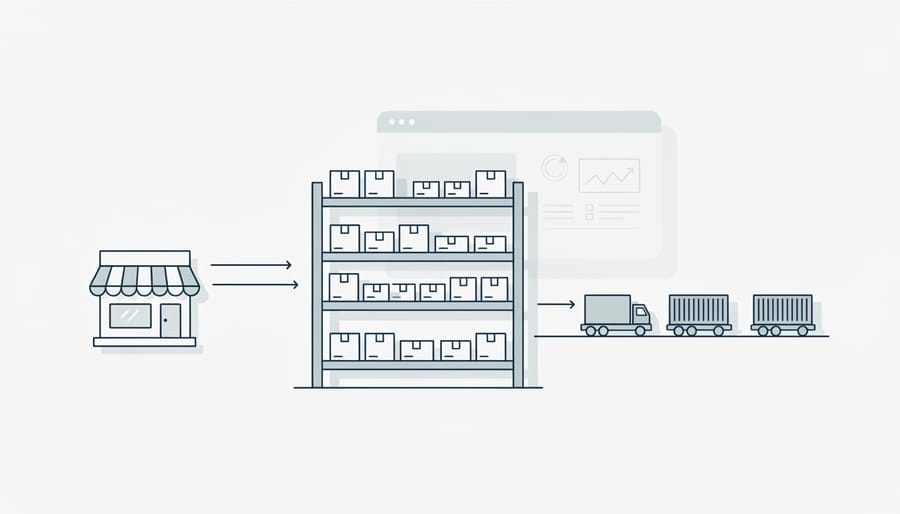
Modernizing Inventory and Supply Chain
Digital inventory systems eliminate the guesswork that costs small businesses money. Cloud-based platforms like Lightspeed, Shopify POS, or even Google Sheets integrations track stock levels in real time, automatically alert you when items run low, and generate reorder reports based on sales velocity. You’ll know exactly what’s selling, what’s sitting on shelves, and when to restock, without manual counts or spreadsheet chaos.
Supplier portals take this further by connecting your inventory system directly to vendors. When stock hits your reorder point, the system can flag items or even auto-generate purchase orders. This cuts days off procurement cycles and reduces the risk of stockouts during busy periods. For Canadian businesses dealing with cross-border suppliers, these portals also simplify customs documentation and shipping tracking.
Predictive ordering uses your sales history to forecast demand. Instead of ordering based on gut feeling, the software analyzes seasonal trends, promotional patterns, and growth trajectories to suggest optimal order quantities. You reduce overstock (which ties up cash) and understock (which loses sales).
Take North of Seven, a Winnipeg-based outdoor gear company. After implementing a cloud inventory system integrated with their e-commerce platform, they cut carrying costs by 18% and virtually eliminated stockouts during their peak winter season. The system’s predictive features helped them confidently scale from one warehouse to three locations without hiring additional inventory staff. Their founder credits the innovation with making sustainable growth possible on tight margins.
Low-Cost Innovation Strategies That Work
You don’t need a hefty innovation budget to make meaningful changes in your business. Many Canadian small businesses achieve significant improvements by starting with free or low-cost digital tools and building from there. The key is identifying which processes consume the most time or create the most friction, then finding simple solutions to address them.
Start by auditing your current workflows to spot inefficiencies. Where do tasks get bottlenecked? Which processes require repetitive manual work? These pain points often have straightforward digital solutions. For instance, if you’re spending hours scheduling appointments, free tools like Calendly or Google Calendar’s appointment slots can automate the entire process. If tracking customer inquiries feels chaotic, a basic CRM like HubSpot’s free tier can organize everything without costing a cent.
Here are practical, low-cost strategies you can implement right away:
- Switch to cloud-based collaboration tools like Google Workspace or Microsoft 365 for real-time document sharing
- Automate social media posting with free scheduling tools like Buffer’s basic plan
- Use project management software like Trello or Asana’s free versions to coordinate team tasks
- Implement digital signature tools like DocuSign’s free tier to speed up contracts
- Set up automated invoice reminders through your accounting software
- Create standardized templates for common documents to save time
Beyond tools, you can use AI for innovation by exploring free AI writing assistants for marketing content or chatbots for basic customer service. Many AI tools offer generous free tiers perfect for testing before committing.
Process innovation matters just as much as technology. Sometimes the best innovation is simply eliminating unnecessary steps. Review your standard operating procedures and ask whether each step adds value. A Halifax bakery cut their order processing time by 40% simply by redesigning their order form to collect all necessary information upfront, eliminating back-and-forth emails.
Start with one small change, measure the results, then build on what works. Innovation doesn’t require transformation overnight, it’s about consistent, incremental improvements that compound over time.
Building an Innovation Mindset in Your Team
The best innovations often come from the people doing the work every day. Your team members see inefficiencies, customer frustrations, and workarounds you might never notice from your desk. The challenge is creating an environment where they feel comfortable speaking up.
Start with regular check-ins specifically focused on improvement ideas. This doesn’t mean formal meetings with agendas. A weekly 15-minute conversation where you ask “What slowed you down this week?” or “If you could change one thing about how we do this, what would it be?” opens the door. When someone shares an idea, respond with curiosity rather than immediate judgment. Ask questions to understand their thinking before explaining why something might or might not work.
Resistance to change usually stems from fear of added workload or concern about making mistakes. Address this directly by framing digital tools and new processes as experiments, not permanent commitments. Tell your team “We’re testing this for three weeks, then we’ll decide together if it’s helping.” This reduces anxiety and gives everyone permission to provide honest feedback.
Celebrate small wins publicly. When a team member’s suggestion saves time or improves customer experience, acknowledge it in front of others. This doesn’t require elaborate recognition programs. A simple “Sarah’s idea to automate our appointment reminders cut no-shows by 30%” during a team huddle reinforces that innovation comes from everyone, not just management.
Consider implementing a “try anything” budget where team members can test small tools or process changes under a set dollar amount without requiring approval. Even $50 per quarter signals trust and encourages experimentation with low-cost solutions that might transform your operations.
Measuring the Impact of Your Innovations
Knowing whether your innovations work is crucial for small business success. Start tracking results within the first month of implementing any new digital tool or process change. The good news? You don’t need complex analytics or expensive software to measure what matters.
Focus on four practical areas. Customer satisfaction shows up quickly through online reviews, repeat purchase rates, and direct feedback. Time savings become obvious when tasks that took hours now take minutes, track how long routine processes take before and after your innovation. Revenue impact appears in your sales figures, average transaction values, and customer lifetime value. Employee efficiency reveals itself through completed tasks per day, reduced overtime, and fewer errors requiring correction.
| Innovation Type | Key Metrics to Watch | Success Indicators |
|---|---|---|
| Customer Communications | Response time, satisfaction scores | 50% faster responses, ratings above 4.5/5 |
| Financial Management | Time spent on bookkeeping, error rate | 3+ hours saved weekly, zero late payments |
| Inventory Systems | Stockouts, carrying costs | 90% fewer stockouts, 15% lower inventory costs |
Set a simple review schedule. Check your chosen metrics weekly for the first month, then monthly once things stabilize. Write down your baseline numbers before implementing any innovation so you have a clear comparison point. If something isn’t delivering results after three months, adjust your approach or try a different solution. The goal is steady improvement, not perfection.
Innovation doesn’t require a complete business overhaul tomorrow. Start with one digital tool or process improvement this week. Maybe it’s setting up automated invoicing, trying a free CRM, or asking your team for their input on what slows them down. The key is taking that first step.
Remember to track results as you implement changes. Even simple before-and-after comparisons show whether an innovation is worth keeping or needs adjustment.
Your competitors aren’t standing still, but neither should you feel overwhelmed. Canadian small businesses have proven time and again that resourcefulness beats big budgets. You already have the entrepreneurial spirit that got your business off the ground. Now apply that same creativity to how you operate. Innovation in small business isn’t about chasing every trend, it’s about finding smarter ways to serve your customers and grow sustainably. You’ve got this.
You may also like
-
Why the Best Canadian Small Businesses Treat Every Client Like Their Only Client
-
How to Run a Profitable Business From Your Kitchen Table
-
How UK Property Buying Services Can Transform Your Small Business Expansion
-
Revamp Your Small Business: Digital Transformation Success in Canada
-
Transform Your Small Business with Must-Have Automation Tools