

Digital e-commerce is the buying and selling of goods or services over the internet, using websites, mobile apps, or online marketplaces to complete transactions electronically. For Canadian small business owners, it means reaching customers beyond your local neighbourhood, processing payments securely online, and running a store that never closes.
The shift to digital selling has become essential, not optional. More than 80 percent of Canadians shop online regularly, and that number continues to climb. Whether you run a bakery in Halifax or sell handmade furniture in Kelowna, e-commerce opens doors to customers across provinces and beyond borders without the overhead of multiple physical locations.
But what does digital e-commerce actually involve? It’s more than just listing products on a website. You need a payment gateway to accept credit cards, inventory management to track stock, shipping integration to fulfill orders, and marketing tools to attract buyers. The technology might sound overwhelming at first, yet modern platforms have simplified the process dramatically. Many Canadian entrepreneurs now launch online stores in a weekend using accessible tools designed for non-technical users.
This article breaks down exactly how digital e-commerce works, the core components you’ll need to get started, and real examples of Canadian businesses thriving online. You’ll learn which digital tools make the biggest difference and how to choose the right approach for your specific products and customers. By the end, you’ll have a clear roadmap to begin selling online or improve your existing digital storefront.
What Digital E-Commerce Means
Digital e-commerce is the complete system of buying and selling goods or services over the internet, powered by digital tools and platforms that connect buyers and sellers without a physical storefront. It goes beyond just having a website, it’s an entire ecosystem where technology handles everything from displaying products to processing payments, managing inventory, and delivering customer service.
The key difference between digital e-commerce and traditional retail comes down to where and how transactions happen. Traditional retail requires a physical location where customers browse in person, select items, and pay at a register. Digital e-commerce moves all of this online: customers shop from their computer or phone, add items to a virtual cart, and complete purchases through secure digital payment systems. The business might not have a physical store at all, or it might use e-commerce to extend its reach beyond local foot traffic.
What makes digital e-commerce work are the interconnected digital tools operating behind the scenes:
- Digital Storefront
- The online space where customers browse and shop, built on an e-commerce platform that displays products, manages the shopping cart, and creates the customer experience.
- Payment Gateway
- The technology that securely processes credit card and digital payment information, transferring funds from the customer’s account to the business.
- Inventory Management System
- Software that tracks stock levels in real-time, automatically updates product availability, and helps prevent overselling.
- Customer Relationship Management (CRM)
- A database system that stores customer information, purchase history, and interactions to help businesses provide personalized service and build loyalty.
These components work together to create what customers see as a simple shopping experience. When someone buys from your online store, dozens of digital systems coordinate instantly, verifying payment, updating inventory, generating shipping labels, and sending confirmation emails. For Canadian small businesses, this digital infrastructure makes it possible to compete with larger retailers by automating tasks that would otherwise require significant staff and resources.
How Digital E-Commerce Works
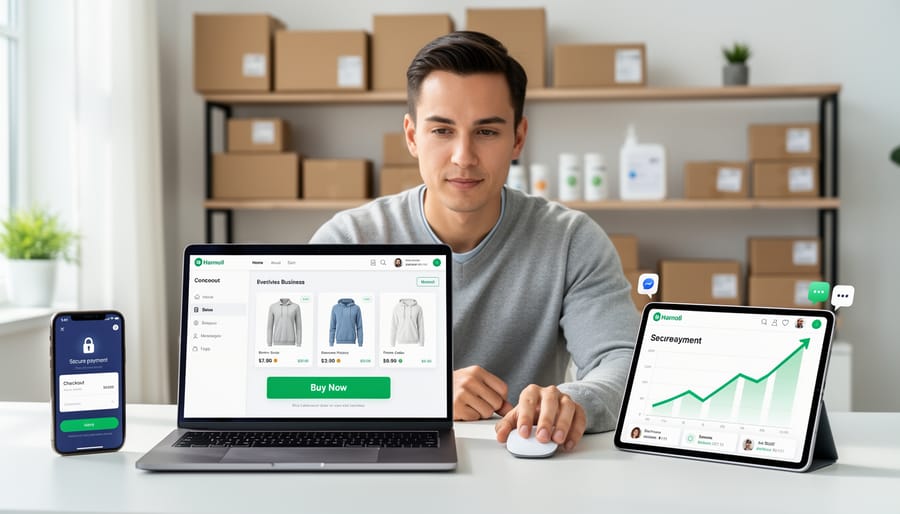
Understanding how digital e-commerce works doesn’t require a computer science degree. At its core, it’s a series of connected steps that happen in seconds, powered by digital tools working together behind the scenes.
Here’s what happens when a customer buys from your online store.
First, a customer discovers your products, usually through search engines, social media, or direct website visits. Your e-commerce platform displays your product catalogue with images, descriptions, and prices pulled from your inventory database. When they click “add to cart,” the system temporarily reserves that item and creates a digital shopping basket tied to their browser session.
Next comes checkout. The customer enters shipping information, which your platform validates in real-time against postal databases. They choose a delivery method, and your system calculates shipping costs based on weight, distance, and carrier rates you’ve configured. This happens instantly, though multiple tools are exchanging data to provide that answer.
Payment processing involves several parties working in milliseconds. When the customer enters card details, your payment gateway encrypts the information and sends it to the payment processor. The processor contacts the customer’s bank to verify funds and approve the transaction. If approved, money transfers from their account to yours (minus processing fees), and your system receives confirmation to proceed.
Once payment clears, your order management system logs the purchase, updates inventory counts, and triggers notifications. You receive an order alert with fulfillment details. The customer gets an email confirmation. Your inventory system marks the item as sold and may automatically adjust reorder levels.
Finally, you pack and ship the order. When you enter tracking information into your system, it automatically emails the customer with their shipping updates. The customer can monitor their package’s journey until it arrives.
All of this coordination between platforms, processors, databases, and communication tools happens automatically, allowing you to focus on running your business rather than managing transactions manually.
Core Components of Digital E-Commerce

Your Digital Storefront
Your digital storefront is where customers see and interact with your products online. It’s the visual face of your e-commerce business, the pages, images, and navigation tools that visitors use to browse and shop.
At the core is your e-commerce platform. Shopify, WooCommerce, and BigCommerce are popular choices that provide the structure for displaying products, organizing categories, and managing the shopping cart. These platforms handle the technical heavy lifting while letting you focus on your merchandise and brand.
Website builders integrate with these platforms to create your storefront’s look and feel. You’ll choose templates, arrange product photos, write descriptions, and design the layout. Modern builders make this approachable even without coding skills.
The customer experience tools within your storefront include search bars that help shoppers find specific items, filters to narrow down options by price or features, and product pages that showcase details, reviews, and clear calls-to-action.
Your storefront also manages the shopping cart, where customers review their selections before checkout. A smooth, intuitive front-end experience directly impacts whether browsers become buyers.
Transaction and Payment Systems
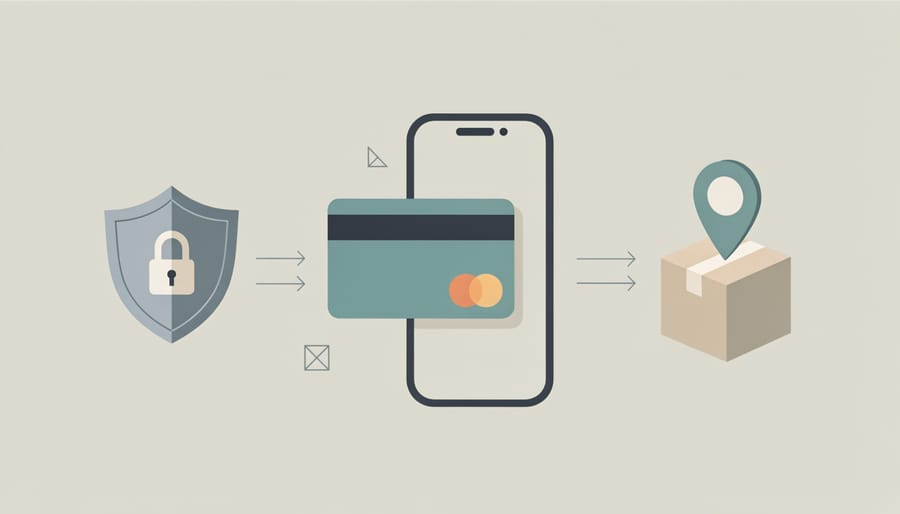
Behind every online purchase sits a network of digital systems handling money with speed and security that would be impossible in physical retail. When a customer clicks “buy”, payment processors like Stripe, PayPal, or Square instantly verify card details, check available funds, and route the transaction through multiple security checkpoints, all in seconds.
These processors don’t just move money. They encrypt sensitive data, detect fraud patterns, and ensure compliance with standards like PCI DSS for e-commerce that protect both you and your customers. For small businesses, this means you’re not responsible for storing credit card numbers or building your own security infrastructure, the payment gateway handles it.
The infrastructure also includes currency conversion tools for international sales, digital wallets like Apple Pay that speed up checkout, and automated systems that reconcile your bank deposits with individual orders. Modern payment systems can even hold funds in escrow, split payments between multiple parties, or process subscription billing without manual intervention.
Security protocols work invisibly: tokenization replaces card numbers with random codes, SSL certificates encrypt data in transit, and two-factor authentication adds extra verification layers. These aren’t optional extras, they’re built into professional payment systems, giving your digital storefront the same transaction security as major retailers.
Backend Management Tools
Once your customer clicks “buy,” a network of backend systems kicks into gear to fulfill that order and keep your business running.
Inventory management systems track your stock in real time, automatically updating product availability across all sales channels. When an item sells on your website, the system deducts it from inventory and can trigger reorder alerts when stock runs low. For Canadian businesses selling both online and in-store, these systems sync inventory across locations to prevent overselling.
Order management platforms organize incoming orders, route them for fulfillment, generate shipping labels, and send tracking information to customers. They’re your digital command center, showing you what needs to ship today and what’s waiting on backorder.
Customer relationship management (CRM) databases store purchase history, preferences, and contact information. This lets you send targeted promotions to repeat buyers or follow up with customers who abandoned their carts.
Analytics dashboards transform raw data into insights. You’ll see which products sell best, where your traffic comes from, what times customers shop, and which marketing efforts actually drive sales. For small business owners, these tools replace guesswork with concrete numbers that guide smarter decisions.
Marketing and Customer Engagement
Digital tools that bring customers to your store and keep them coming back include email marketing platforms like Mailchimp, social media scheduling tools, and customer relationship management (CRM) systems. These digital marketing components help you announce new products, recover abandoned carts, and maintain ongoing conversations with your audience across multiple channels.
How Canadian Businesses Use Digital E-Commerce
Canadian small businesses are using digital e-commerce in remarkably diverse ways, from traditional product sales to innovative service delivery models. What works best depends on your business type, customer base, and operational capacity.
Retail and product-based businesses represent the most visible e-commerce adopters. A boutique clothing store in Halifax might sell through its own website while simultaneously listing items on Etsy and Instagram Shop. A specialty food producer in Québec uses e-commerce to ship artisan products nationwide, reaching customers far beyond local farmers’ markets. These businesses typically handle physical inventory, shipping logistics, and online product photography as part of their digital operations.
Service-based businesses have adapted digital e-commerce to their unique needs. Yoga studios in Vancouver offer online class bookings with automated payment collection. Consulting firms use client portals for project management and invoicing. Freelance professionals leverage platforms that handle contracts and payments seamlessly, reducing administrative overhead while maintaining professional client relationships.
Common applications across Canadian businesses include:
– Retail product sales with integrated shipping and tax calculation
– Digital product delivery for courses, templates, and downloadable content
– Service booking and scheduling with automated confirmations
– Subscription models with recurring payments for memberships or regular deliveries
– B2B wholesale portals for trade customers with volume pricing
– Multi-channel selling across websites, marketplaces, and social commerce platforms
The subscription model deserves special attention for Canadian businesses. Coffee roasters offer monthly bean deliveries. Pet supply stores provide regular shipments of food and treats. Even contractors use subscription approaches for maintenance services, creating predictable revenue streams while offering customer convenience.
Geographic challenges unique to Canada make e-commerce particularly valuable. Businesses in remote areas can reach urban markets without physical expansion. Seasonal operations extend their earning potential year-round through online sales. The ability to serve customers across multiple time zones without maintaining physical locations has democratized market access for small operations throughout the country.
Getting Started with Digital E-Commerce
Starting your digital e-commerce journey doesn’t require a massive budget or technical expertise. Begin by selecting an e-commerce platform that matches your current needs and budget, Shopify and WooCommerce are popular Canadian choices, but evaluate features like payment processing fees, ease of use, and scalability before committing. Your first priority should be creating a mobile-friendly storefront since over 60% of online shopping happens on smartphones.
Once your basic storefront is live, implement Google Analytics to understand visitor behaviour from day one. This free tool shows you which products attract attention, where customers drop off, and which marketing efforts actually drive sales. Beginners should resist the urge to add every available feature immediately, start with essential functionality like product listings, a shopping cart, checkout, and basic analytics.
Established businesses upgrading their digital presence should prioritize integration over replacement. Connect your existing inventory management, accounting software, and customer databases to your new e-commerce platform to avoid duplicate data entry. Consider automated email marketing and customer relationship management tools once you’ve mastered the basics, not before. The most successful launches happen in stages: get your core store functioning properly, then add sophisticated features like abandoned cart recovery, loyalty programs, and advanced analytics as you grow comfortable with the platform and understand what your specific customers need.
Common Questions About Digital E-Commerce
Most small business owners have similar concerns before launching online. Let’s address the questions we hear most often.
How much does it cost to start digital e-commerce?
You can launch a basic online store for $30, $100 per month using platforms like Shopify or WooCommerce, plus payment processing fees of around 2.9% per transaction. Your actual costs depend on the tools you choose and whether you already have products and branding ready.
Do I need technical skills to run an e-commerce site?
No specialized coding knowledge is required. Modern platforms handle the technical infrastructure, letting you build and manage your store through visual editors and straightforward dashboards. If you can use email and social media, you can run an online store.
How long does setup actually take?
A functional store can go live in a weekend if you have your products, photos, and descriptions organized. Expect to spend two to four weeks refining your site, testing checkout, and setting up shipping and tax rules properly.
Can I sell online while keeping my physical location?
Absolutely. Many Canadian retailers operate both, using digital e-commerce to reach customers beyond their local area while maintaining their storefront. Your online inventory can mirror your in-store stock or feature different products entirely.
What about Canadian taxes and compliance?
You’ll need to collect GST/HST or PST depending on your province and sales volume. Most e-commerce platforms can automate tax calculations for Canadian addresses, but consult an accountant to ensure you’re registered and remitting correctly.
The barriers to entry have dropped dramatically. Where launching online once required developers and significant capital, today’s tools put e-commerce within reach of any business owner willing to learn the basics. Start with a simple setup, test with real customers, and expand your digital capabilities as you gain confidence and revenue.
Digital e-commerce isn’t reserved for big corporations with massive budgets. It’s built for businesses like yours. The tools and platforms available today make it possible for any Canadian small business owner to compete online, reach new customers, and grow at their own pace.
You don’t need to master everything at once. Start with the basics: a solid platform, secure payment processing, and a clear understanding of your customers. As your business grows, you can add more sophisticated tools and expand your digital presence. The beauty of e-commerce is that it scales with you.
The digital landscape might seem overwhelming at first, but thousands of Canadian entrepreneurs have walked this path before you. They started where you are now, learned as they went, and built successful online businesses. The technology exists to support you, the resources are accessible, and the potential is real.
Take that first step. Choose a platform, set up your digital storefront, and start selling. The sooner you begin, the sooner you’ll discover what works for your business and your customers. Your online journey starts with a single decision to move forward.
You may also like
-
What Smart Buyers Look For in a Saskatchewan Business for Sale
-
Using Reddit to Launch a New Product: Eligibility, How to Navigate the Platform, and Where to Get Help
-
10 Digital Marketing Ideas for Small Businesses That Drive Real Results
-
12 Digital Innovation Examples Transforming Small Business Operations in 2026
-
B2B Marketing Consulting Services: What They Are and How They Help Canadian SMBs Grow