

The best small garage business ideas are the ones that match a skill you already have to a need your neighbours already feel, and the eight below do exactly that. Each can launch with a modest budget, a few weeks of setup, and space you’re already paying for: custom woodworking, small-batch food production, mobile detailing, bike and small engine repair, screen printing and custom apparel, ecommerce fulfillment, a content studio, and furniture upcycling.
Why these? A garage gives you something most startups pay dearly for, which is free workspace. Pair that with low equipment costs and local demand, and you can test an idea before committing serious money. Many Canadians start this way, selling their first few pieces or services to friends, hockey teams, and community groups before building a loyal customer base.
If you’re weighing your options, think about three things: what you enjoy doing for hours at a stretch, what neighbours would pay for, and how much room and noise your setup allows. Browse our broader list of home business ideas if you want more options beyond the garage.
Below, you’ll find how we chose these eight, followed by startup basics, a practical tip for each, and a quick look at the permits and setup details Canadian entrepreneurs should check before opening the garage door.
How We Chose These Garage Business Ideas
Every idea on this list went through the same simple filter. We wanted businesses a Canadian entrepreneur could realistically launch from a garage without a big loan or a rented storefront. Here’s what each one had to meet:
- Low startup costs, so you can begin with a modest budget and grow from there.
- Realistic space needs, meaning it fits in a single or double garage without taking over the house.
- Steady demand across Canadian communities, from small towns to city neighbourhoods.
- Room to scale, whether by raising prices, adding services, or eventually moving to a larger space.
- A reasonable skill barrier, so a motivated beginner can learn the basics quickly.
- Flexibility for local markets, since demand and rules vary from one municipality to the next.
We also looked closely at how well each idea suits an actual garage. Noise matters if you have close neighbours, ventilation matters when you’re working with finishes or fumes, and storage matters when materials and inventory pile up fast. A business that looks great on paper but needs constant loud machinery or a spotless sterile room didn’t make the cut.
One note on how this list was built: it’s curated from common, proven business models, not hands-on tested. Treat it as a starting point for your own research, then check what works in your community before you invest.
8 Garage-Based Business Ideas Worth Starting
1. Custom Woodworking and Furniture Building, Turn Skills Into Sales
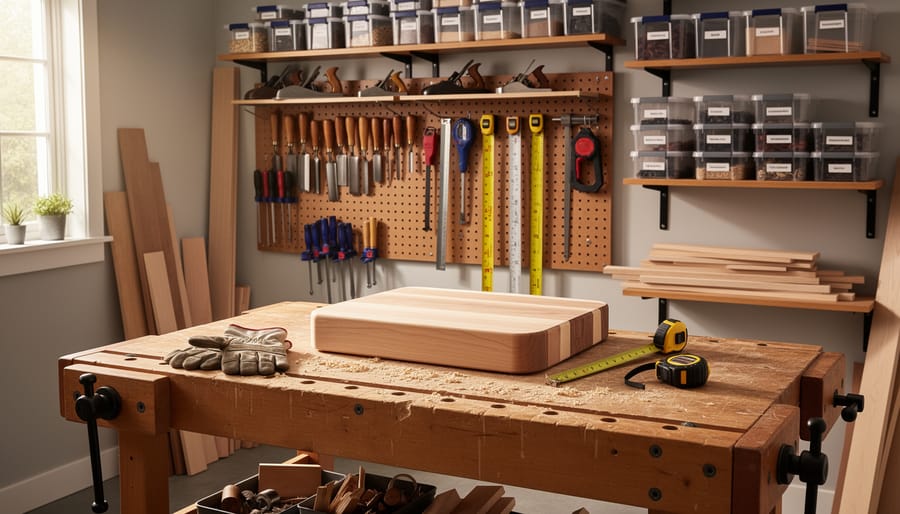
Woodworking is one of the most natural fits for a garage. You already have the space, and a skilled hobbyist can turn weekend projects into real income. Popular starting products include cutting boards, floating shelves, benches, and custom tables made to a customer’s exact measurements.
Start small. A table saw or circular saw, a random orbital sander, a drill, clamps, and a decent workbench will cover most early projects. Dust is the part people underestimate. Fine sawdust irritates lungs and can become a fire risk, so budget early for a shop vacuum with a HEPA filter, a dust collection setup for your sander, and a properly rated respirator. Good ventilation matters too, especially when you’re finishing pieces with stains or oils.
For sales, local craft fairs and farmers’ markets let customers touch the work and talk to the maker, which builds trust fast. Online marketplaces and social media then extend your reach beyond your neighbourhood. Many buyers actively look for made-in-Canada goods, and being able to say a piece was built from locally sourced lumber in a nearby garage is a genuine selling point.
Picture a hobbyist who starts by making cutting boards as gifts. Friends ask for more, a market table sells out, and within a couple of years custom orders replace the day job. That path is common in the maker community, and it usually begins with one well-made product and a few happy customers.
Actionable tip: pick one signature product, perfect it, and photograph every piece in good natural light.
2. Small-Batch Food Production, From Garage Kitchen to Local Shelves

Small-batch food is one of the most popular home-grown ventures, and it’s easy to see why. A good jam, hot sauce, granola, or batch of cookies can build a loyal following in your own neighbourhood before you ever think about a storefront.
Here’s the catch to understand early: your garage usually can’t be your licensed kitchen. Most municipalities and public health units require food to be prepared in an approved, inspected space, and a garage rarely qualifies. Rules differ from place to place, so contact your municipality or local public health unit before you buy a single jar. They can tell you which products are low-risk, what labelling you need, and whether you’ll need a food handler certificate.
That doesn’t mean the garage is useless. Many makers rent time in a shared commercial kitchen, then use the garage for dry storage, labelling, packaging, and organizing orders. It keeps your startup costs low while keeping you compliant.
Once you’re set up, focus on the sales channels that welcome new makers. Farmers’ markets are a great testing ground, because you get instant feedback and a chance to hand out samples. Local grocers, cafés, and specialty shops often like carrying products from nearby producers, especially when the story behind the label is strong.
Start with one or two products, nail the recipe and the cost per unit, and expand only when customers keep coming back.
3. Mobile Detailing and Car Care Studio, Steady Demand Year-Round

Car owners spend money on their vehicles in every season, which is why detailing is such a dependable garage business. In summer, customers want a deep clean and a glossy finish. In winter, they want the salt gone, and that is where a Canadian detailer can really earn their keep.
Your garage can work in two ways. It can be an indoor bay where you clean, polish, and apply paint protection like wax, sealant, or ceramic coating, free from rain, dust, and cold snaps. Or it can be a supply hub for a mobile setup, holding your pressure washer, microfibre towels, polishers, and chemicals between jobs. Many beginners start mobile and use the garage for the finishing work that needs a controlled space.
Startup costs stay modest. A decent polisher, a quality wet/dry vacuum, a range of cleaning products, and a pile of microfibre cloths will get you going. Add a water source and a reliable extension cord, and you can accept bookings right away.
The real money is in repeat customers. Offer a quarterly or seasonal maintenance plan, such as a fall protection package before the salt hits and a spring wash to strip away winter grime. Customers who commit to a plan give you predictable income, and they tend to refer neighbours.
Pricing should follow the calendar. Charge more for undercarriage rinses and salt removal in late winter, and for paint correction before summer car-show season. Check your local rules about wastewater runoff before you start, since cleaning products shouldn’t go down storm drains.
4. Bike, Ski, and Small Engine Repair, Fix What Neighbours Already Own

Most households own a bike, a snowblower, a lawn mower, or a pair of skis that needs attention at some point. That steady supply of neglected gear is exactly why repair works so well from a garage. You’re not creating demand. You’re fixing what neighbours already own.
The business follows the calendar. Bikes need tune-ups in early spring, lawn mowers right after, and snowblowers and skis in the fall before the first real snowfall. Plan your marketing around each rush, and use the quiet stretches to restock parts or learn a new repair.
Startup costs stay low because you likely own half the kit already. A sturdy workbench, a basic tool set, a bike stand, a ski tuning kit, and a few specialty tools get you going. If you can run a small garage shop on a few hundred dollars of gear, you can start earning before you’ve spent much. Clear, honest pricing and reliable turnaround do the rest. Happy customers tell their neighbours, and in a small community that word-of-mouth can fill your calendar without any paid advertising.
Here’s a pricing tip that saves headaches: offer flat-rate tune-up packages, such as a basic and a full service, rather than billing by the hour. Customers like knowing the cost upfront, and you can quote quickly. Add parts at cost plus a modest markup, and list what each package includes so there are no surprises at pickup.
5. Screen Printing, Embroidery, and Custom Apparel, Branding for Local Teams

Custom apparel is a strong fit for a garage because the work is mostly tabletop-sized, and demand comes from groups that need the same thing in bulk: minor hockey teams, rec leagues, school clubs, local cafés, and charity runs.
You can enter at a few different levels. The simplest start is a heat press paired with a vinyl cutter, which handles names, numbers, and small logos with little mess and a modest upfront cost. Entry-level manual screen printing presses are the next step up. They produce durable, bold prints for larger orders but need space for exposing screens, washing out ink, and drying shirts. Embroidery machines cost more, though hats and polos with stitched logos often carry higher margins. Many newer makers begin with a heat press, then add equipment once orders justify it.
Good ventilation matters when you’re working with inks, solvents, and heat, so plan for airflow and a dedicated drying area. Shelving for blank garments keeps things tidy and orders moving.
Finding early customers is mostly about showing up locally. Offer a discounted run to a youth team or community association, then ask for a mention in their newsletter or social channels. Visit local businesses that have staff or event shirts and bring a few sample pieces. Team orders tend to repeat each season, which gives you steadier income than one-off sales.
A practical tip: set a minimum order size so setup time always pays for itself.
6. Ecommerce Fulfillment and Storage Hub, Sell Online Without a Warehouse
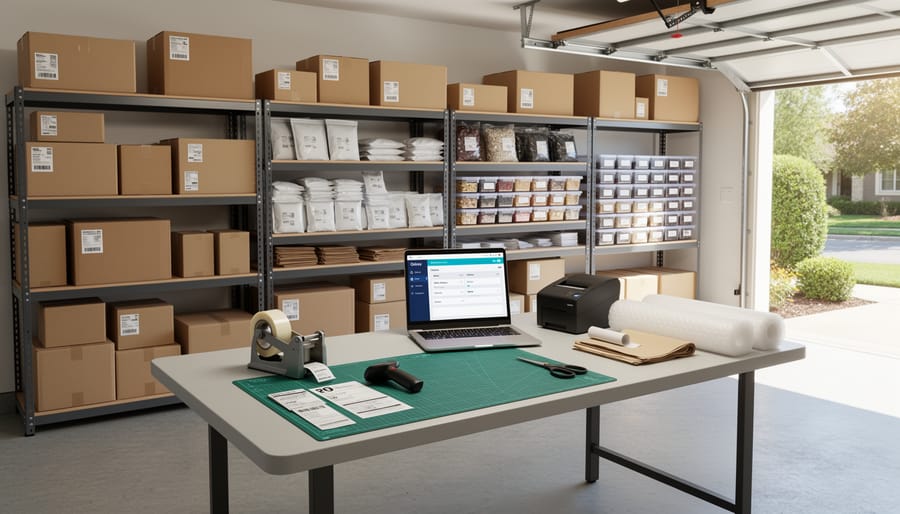
If you’d rather sell products than make them, an ecommerce fulfillment hub is a practical fit. Your garage becomes the warehouse, and the work is simple: buy or source inventory, store it, pack it, and ship it. Many people start by reselling items like thrifted goods, liquidation lots, or wholesale products on marketplaces such as Etsy or eBay. If dropshipping hasn’t worked for you because of slow shipping times and thin margins, holding a small stock of your own gives you control over quality and delivery speed.
You can also offer storage and shipping help to other local online sellers who’ve outgrown their spare bedroom. That turns the garage into a service business with steady, repeat income.
Setup doesn’t need to be fancy. Sturdy freestanding shelving, clear labelled bins, and a clean packing table go a long way. Keep a stocked supply station with boxes, poly mailers, tape, bubble wrap, and a thermal label printer. Store everything off the floor and away from the garage door to guard against moisture and winter temperature swings.
Tip: Group items by how fast they sell and keep your top sellers closest to the packing table. It cuts handling time and makes growth easier.
Before you scale up, check your municipality’s zoning and home-business rules. Frequent courier pickups, customer drop-ins, or large inventory volumes can trigger restrictions, so confirm what’s allowed first.
7. Content Studio and Digital Services, Podcasting, Video, and Photography
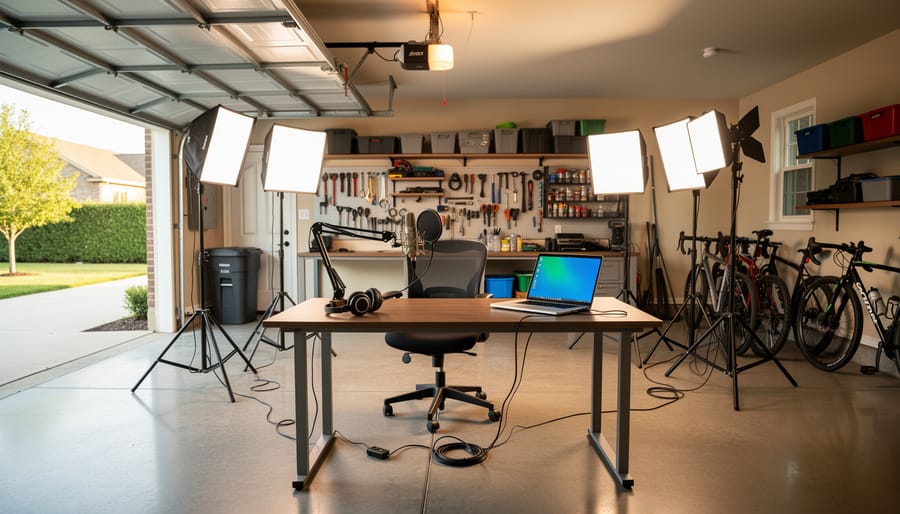
A garage makes a surprisingly good studio. The concrete shell blocks a lot of street noise, and you control the lighting, which is half the battle in photography and video. Start with sound: hang moving blankets or acoustic panels on the walls, lay down a rug, and park a few bookshelves or boxes of stock against the door side to break up echo. A decent USB microphone, a tripod, two softbox lights and a plain backdrop will cover most beginner jobs without a big cash outlay.
The real opportunity is selling these skills to other small businesses. Local shops, tradespeople and restaurants often know they need product photos, short social videos or a podcast to stay visible online, but they don’t have the gear or the time. You can offer monthly packages: a batch of product shots, a handful of vertical clips for social media, or full podcast editing and publishing. That’s digital marketing support built around something tangible, and it tends to bring repeat clients.
Here’s a tip that works: build your portfolio before you have paying clients. Photograph a friend’s handmade goods, record a short mock interview, or shoot a quick promo for a neighbour’s business. Pick your five best pieces, put them on a simple one-page website, and add a short line about what you did for each. That small collection often lands the first paid job.
8. Upcycling and Furniture Refinishing, Give Old Pieces New Life

Upcycling is one of the easiest ways to start a garage business with almost no capital. Your raw material is other people’s castoffs: solid-wood dressers, dated side tables, and scuffed dining chairs that someone is happy to part with cheaply or for free. Check online marketplaces, curbside pickups, estate sales, and thrift stores, and keep an eye out for good bones over cosmetic flaws. A sturdy frame with ugly paint is a far better buy than a wobbly piece that needs structural repair.
Your startup kit is modest. Plan on sandpaper, a few brushes, primer, quality paint or stain, sealer, and new hardware, which usually adds up to well under a few hundred dollars. A garage works well because you can sand and spray with the door open for ventilation, and finished pieces can dry safely off the driveway or lawn. Always wear a proper respirator, especially if you suspect an older piece was finished with lead-based paint.
The appeal goes beyond the numbers. Many buyers love knowing they’re keeping furniture out of the landfill, and that story helps your listings stand out. Margins can be strong too, since a piece bought for $30 and carefully refinished may sell for several times that. Patient, detail-oriented makers tend to do best, because clean edges and smooth finishes are what justify the price.
Actionable tip: photograph every piece in natural light, with before-and-after shots. Those images sell your work faster than any description.
Before You Open the Garage Door: Zoning, Insurance, and Setup Basics
A little prep work before you open for business saves headaches later, and most of it is simple paperwork and phone calls.
Start with zoning. Many municipalities have home-based business rules that limit customer traffic, signage, noise, or the use of an attached or detached garage. Rules differ from town to town, so confirm what applies where you live. If you want a clear walkthrough, this guide on how to legally use your garage covers the process step by step.
Next, register your business. Depending on your structure and location, that might mean a business name registration, a municipal licence, or a tax account. Check with your province or territory for the specifics.
Insurance deserves its own attention. A standard home policy often doesn’t cover business activity, equipment, or inventory, and it may not respond if a customer is injured on your property. Ask your insurer about a home-business endorsement or separate commercial liability coverage.
Finally, think about the space itself. A garage that’s comfortable in July can be brutal in January, so plan for insulation, safe heating, and ventilation if you’re working with dust, fumes, or finishes. Power matters too. Tools, printers, or studio gear can overload a basic circuit, so have a licensed electrician check your capacity before you plug everything in.
Get these basics sorted and you can focus on the fun part: building something of your own.
Garage Business Questions Canadian Entrepreneurs Often Ask
How much does it cost to start a garage business?
It depends on the idea. Upcycling or bike repair can start with a few hundred dollars in basic tools, while screen printing or a content studio can run into the thousands for equipment. Sketch a simple startup budget before you buy anything.
Do I need a licence or permit?
Often, yes. Requirements vary by municipality and by business type, so check your local zoning and home-based business rules first. Food production has the strictest oversight, so contact your public health unit before you sell a single jar.
Can I run a business from a rented or condo garage?
Maybe, but get written permission first. Your lease or condo bylaws may restrict business activity, noise, customer visits, or storage of materials. A quick conversation with your landlord or condo board can save you a lot of trouble later.
How do I find my first customers?
Start close to home. Tell neighbours, post in local community groups, and offer a small introductory deal. Sports clubs, farmers’ markets, and nearby businesses are great early sources of word-of-mouth referrals.
Can you grow beyond the garage? Many owners do, though plenty are happy staying put. Once you’re turning away work or running out of space, it’s a good sign you’ve validated demand. Consider moving to a shared workshop, a rented commercial kitchen, or a small unit, but only when steady sales can cover the extra overhead.
Choosing Your Garage Business and Taking the First Step
Every idea on this list works best when it fits what you already do well, what you can afford to spend, and what your neighbours will actually pay for. Start small, sell to a handful of real customers, and let their feedback tell you whether to invest in better gear or more space. Even simple automation tools can wait until you’ve proven there’s demand.
Your next step is a small one. This week, sketch a simple startup budget for the idea that excites you most, and you’ll see how close you already are to opening the garage door.
You may also like
-
What Smart Buyers Look For in a Saskatchewan Business for Sale
-
Using Reddit to Launch a New Product: Eligibility, How to Navigate the Platform, and Where to Get Help
-
10 Digital Marketing Ideas for Small Businesses That Drive Real Results
-
What Is a Senior-Level Applicant on LinkedIn (and How Does It Work)?
-
12 Digital Innovation Examples Transforming Small Business Operations in 2026